

Phone and Screen Addiction: How Late-Night Scrolling Triggers Anxiety and Insomnia

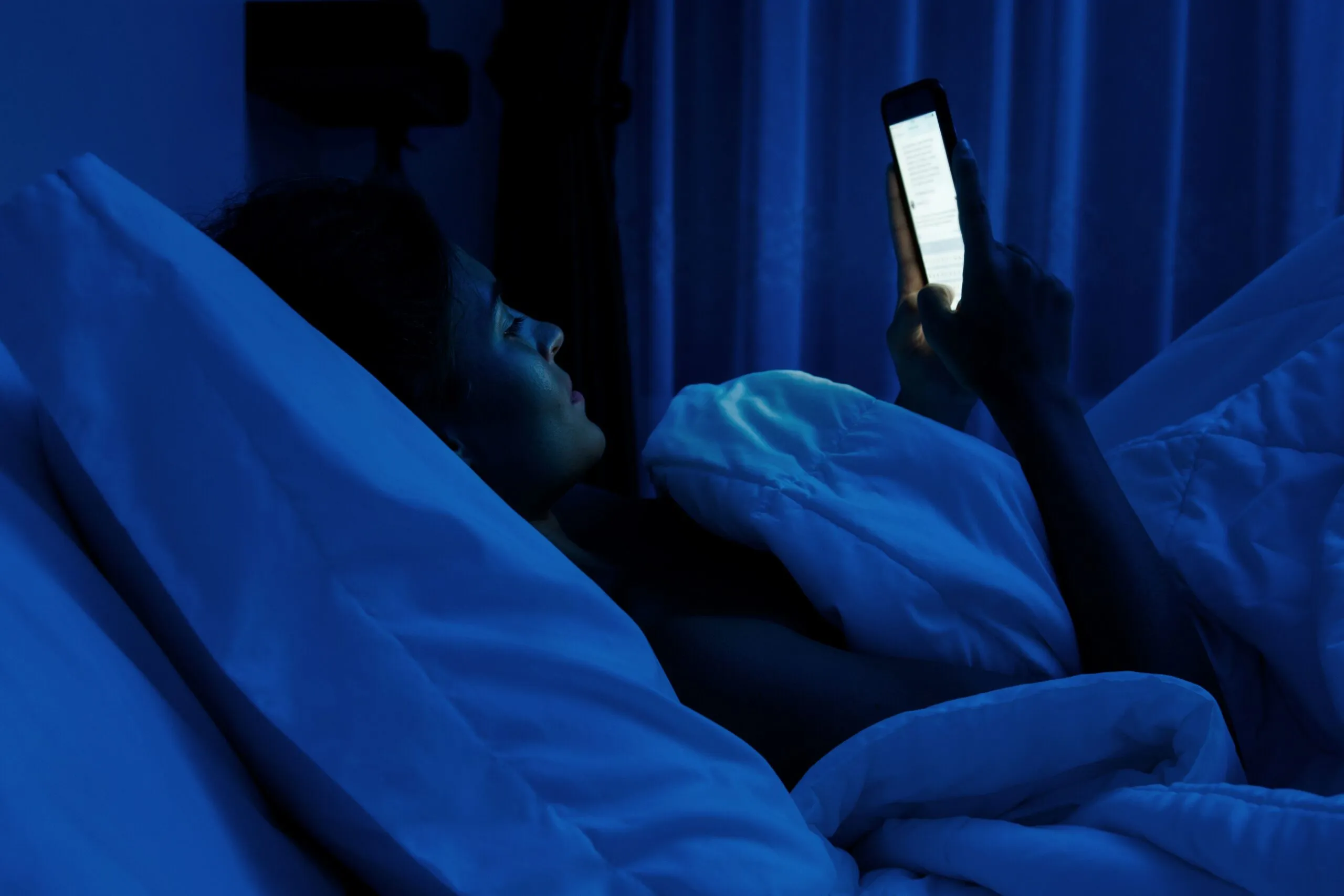
If you can’t sleep because of your phone — stuck scrolling even though you’re exhausted — you’re not alone. Many people experience phone and screen addiction most strongly at night, lying in bed with good intentions, yet unable to stop checking, scrolling or refreshing.
This isn’t because you lack self-control. And it’s not because you don’t know screens aren’t good for sleep.
Late-night scrolling often happens because the mind is overstimulated, the nervous system is unsettled, and the phone offers distraction and comfort — even when it’s making anxiety and insomnia worse.
Why Phone Use Becomes Hardest to Control at Night
During the day, attention is anchored by tasks, conversations and responsibilities.
At night, everything slows down.
This is often when:
- anxiety finally has space to surface
- thoughts begin looping
- emotional tension shows up
- the body feels tired but the mind stays alert
The phone becomes something to hold onto.
Scrolling offers:
- distraction from thinking
- relief from restlessness
- a sense of connection
- something predictable to focus on
Over time, the brain learns:
“This helps me cope when things go quiet.”
That’s when phone use can start to feel compulsive rather than chosen.
A Gentle Perspective on Late-Night Scrolling
This pattern is something Ailsa Frank sees regularly in her work.
Ailsa is a British hypnotherapist, motivational speaker and Hay House author, known for helping people change habits around anxiety, sleep and emotional wellbeing without pressure or judgement.
Her approach recognises that late-night scrolling isn’t really about the phone, it’s about what’s happening inside the nervous system when the day ends.
As Ailsa explains:
“Most people don’t scroll at night because they want to. They scroll because their mind is still unsettled. When we help the nervous system calm, the habit often fades on its own.”
This shifts the focus away from control and towards understanding, which is often where change begins.
The Moment Late-Night Scrolling Really Begins
For many people, scrolling doesn’t start because they want to look at something.
It starts in the moment the day ends.
You lie down.
The noise drops.
Your body slows — but your mind doesn’t.
There can be a brief, uncomfortable space where nothing is demanding your attention, yet everything you’ve been holding in starts to surface. The phone fills that space instantly.
This is why late-night scrolling often feels automatic. It’s not about entertainment — it’s about avoiding that unsettled feeling between “doing” and “resting”.
Understanding this moment is important, because it changes the question from
“Why can’t I put my phone down?”
to
“What am I trying not to feel right now?”
When Scrolling Becomes a Way to Manage Anxiety
Late-night scrolling isn’t really about content.
It’s about regulation.
The nervous system, still activated from the day, looks for stimulation to stay occupied. The phone delivers constant novelty and movement — which keeps the mind busy but also alert.
This is why people often say:
- “I know it’s keeping me awake, but I can’t stop”
- “I just need to scroll for a bit to relax”
- “I’ll put it down in a minute”
The intention is rest.
The result is overstimulation.
How Late-Night Phone Use Affects Sleep
When scrolling continues late into the night, several things tend to happen:
- the mind stays switched on
- anxiety increases rather than settles
- thoughts race once the phone is put down
- falling asleep takes longer
- sleep feels lighter and less restorative
Research consistently shows that phone use late at night keeps the brain in an alert state, making it harder to fall asleep. According to the Sleep Foundation, screens stimulate the brain and delay the natural wind-down process that helps the body prepare for rest, increasing feelings of alertness and anxiety when you’re trying to sleep.
This helps explain why many people feel tired but wired after scrolling — exhausted in the body, but mentally switched on long after the phone is finally put down.
Over time, this can create a frustrating cycle:
poor sleep → more anxiety → more scrolling the next night.
Why Willpower Rarely Fix Phone Addiction at Night
Many people try to deal with phone addiction by setting rules:
- “No phone after 10pm”
- “I’ll just check messages”
- “I’ll stop after five minutes”
These rules often collapse when anxiety or restlessness is present.
That’s because late-night scrolling isn’t a logical choice. It’s a nervous-system response.
When the system is unsettled, it reaches for what feels familiar and soothing — even if that thing is also causing the problem.
How Hypnotherapy Helps Reduce Phone and Screen Addiction
Hypnotherapy works with the subconscious mind — the part responsible for habits, emotional regulation and automatic behaviour.
Rather than forcing yourself to stop scrolling, hypnotherapy helps to:
- reduce night-time anxiety
- calm mental restlessness
- ease the urge for stimulation
- help the body feel safe enough to rest
As this happens, many people naturally put their phone down earlier — not through effort, but because the pull is weaker.
Hypnotherapy Recordings That Support Better Sleep and Less Scrolling
Within the Feel Amazing app, created by Ailsa Frank to provide gentle, soothing, on-demand hypnotherapy for anxiety, sleep and emotional habits, many people use a combination of recordings to support late-night phone use:
- Get Off Your Screen (New) — to reduce the pull of the phone before bed
- Inner Calm — to settle anxiety and mental restlessness
- Good Night’s Sleep — to ease the transition into rest once the phone is put away
These recordings work at a nervous-system level — helping the mind feel safe enough to disengage from stimulation and move towards sleep.
A Real Experience from one Feel Amazing App Listener
Many people describe the change as subtle but relieving:
“I used to lie in bed scrolling for hours, feeling anxious and exhausted. Using the recordings helped my mind slow down. I didn’t have to force myself to stop, I just felt calmer and didn’t need the phone in the same way.”
— Feel Amazing app listener
Frequently Asked Questions
Why can’t I sleep because of my phone?
Phones keep the brain mentally active at a time when it needs to slow down. Scrolling increases alertness and can heighten anxiety, making sleep harder.
Is scrolling at night a sign of anxiety?
Often, yes. Late-night scrolling is commonly a way of managing restlessness or anxious thoughts when everything goes quiet.
Why do I feel more anxious after scrolling in bed?
Because stimulation keeps the nervous system active. Once the phone is put down, anxious thoughts often rush back in.
How do I stop scrolling without forcing myself?
Habits tend to soften when anxiety and restlessness are addressed first. Calming the nervous system often reduces the urge naturally.
Can hypnotherapy really help with phone addiction and sleep?
Yes. Hypnotherapy works with subconscious habits and emotional regulation, rather than relying on willpower or strict rules.
Phone Habits Are Often About Regulation, Not Control
If scrolling at night is affecting your sleep or anxiety, it usually means your mind is still carrying the day with it into the evening.
The phone has simply become a way to stay occupied when things finally slow down.
You don’t need to blame yourself.
You don’t need stricter rules.
And you don’t need to force yourself offline.
When the nervous system feels calmer, the urge to keep scrolling often reduces on its own.
Inside the Feel Amazing app, Ailsa’s hypnotherapy recordings — including Get Off Your Screen, Inner Calm, and Good Night’s Sleep — are designed to help the mind settle, so rest feels easier and more natural.
Many people find that when they feel calmer inside, they simply stop reaching for the phone in the same way — and sleep comes more easily as a result.