

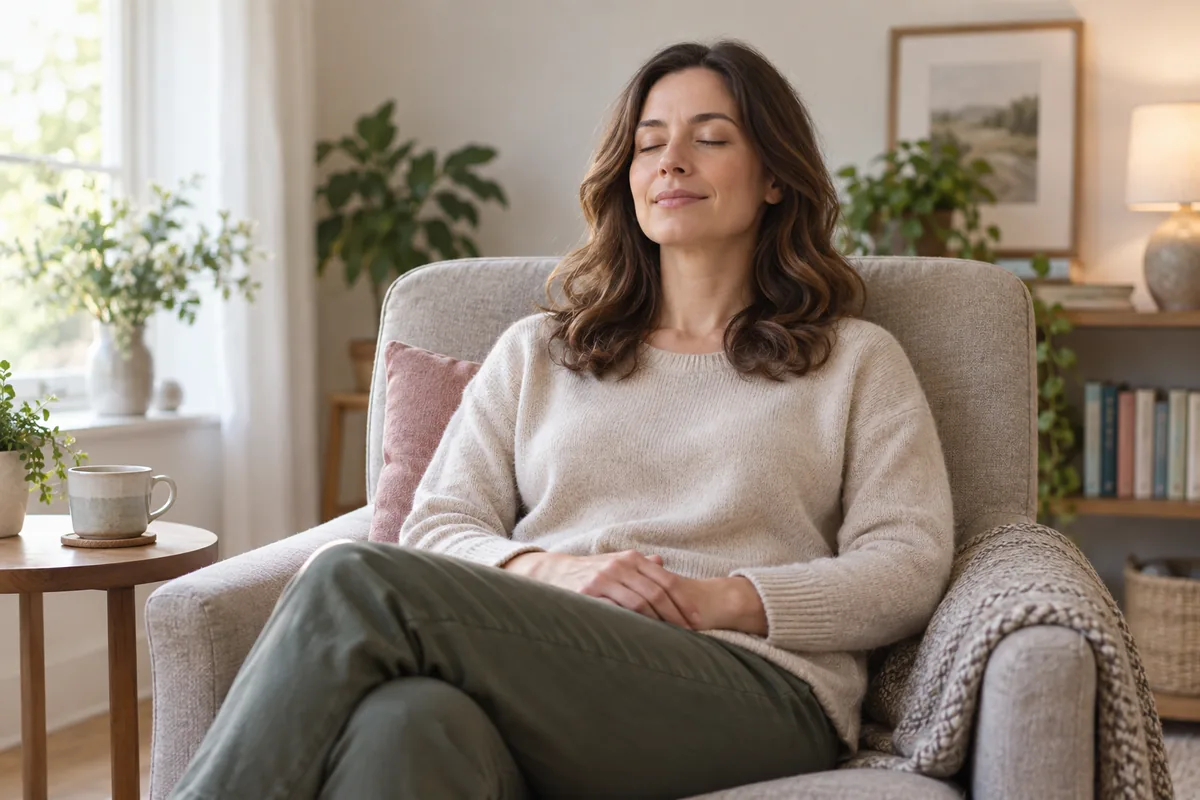
Self-hypnosis is a way to guide your own attention using relaxation, imagery and suggestions you have chosen in advance. It can be a useful practice for calm, focus or rehearsing a manageable goal, but it is not a magic fix and results vary.
You can practise for a few minutes at home, in a hotel or before a meeting. The important point is to choose a safe place where you do not need to drive, supervise someone or stay alert to a task.
Self-hypnosis uses the same basic ingredients as a guided session: focused attention, reduced distraction, imagination and purposeful suggestion. You remain aware and in control throughout.
It overlaps with some relaxation and visualisation practices, although people use the terms differently. What matters is whether the exercise is safe, comfortable and useful for your aim.
There is no required duration. A brief, regular practice may be more useful than forcing a long session. Notice what changes in real life, rather than judging success by how “deep” you felt.
Self-hypnosis can support planning and confidence, but it cannot guarantee that a dream will come true or change circumstances outside your control.
Never practise or listen to a hypnosis recording while driving, cycling, operating machinery or doing anything that needs full attention. Stop if you feel distressed, disoriented or unwell.
If you have psychosis, significant dissociation, severe trauma symptoms, epilepsy or another condition that may affect safety, ask an appropriately qualified healthcare professional before trying hypnosis. Self-help should not replace medical or psychological treatment.
The complete legacy article is preserved below for comparison.
I teach self hypnosis to my clients which is a relaxation technique which takes a few minutes each day that allows you to get your mind working for your benefit. You can do the technique in the morning when you wake as you lie in bed contemplating getting up. It only takes a few minutes although you can also use it for as long as you like. It works well on long flights to use up some of the time positively. Many of my business clients prepare meetings using the technique on flights. It also helps to use it in hotels when on business trips.
You can use it for setting goals and realising dreams or for whatever comes to mind . Some people make a list of things they want to change during the self hypnosis.
Self hypnosis positively enhances your beliefs and deep subconscious programming thus improving all areas of your life.
Self hypnosis used regularly can significantly improve your life.
Hypnotherapy in Ascot Berkshire, near Windsor and Bracknell. Also Sunningdale,Egham, Camberley, Virginia Water in Surrey











Transform your life with expert hypnotherapy from Ailsa Frank.